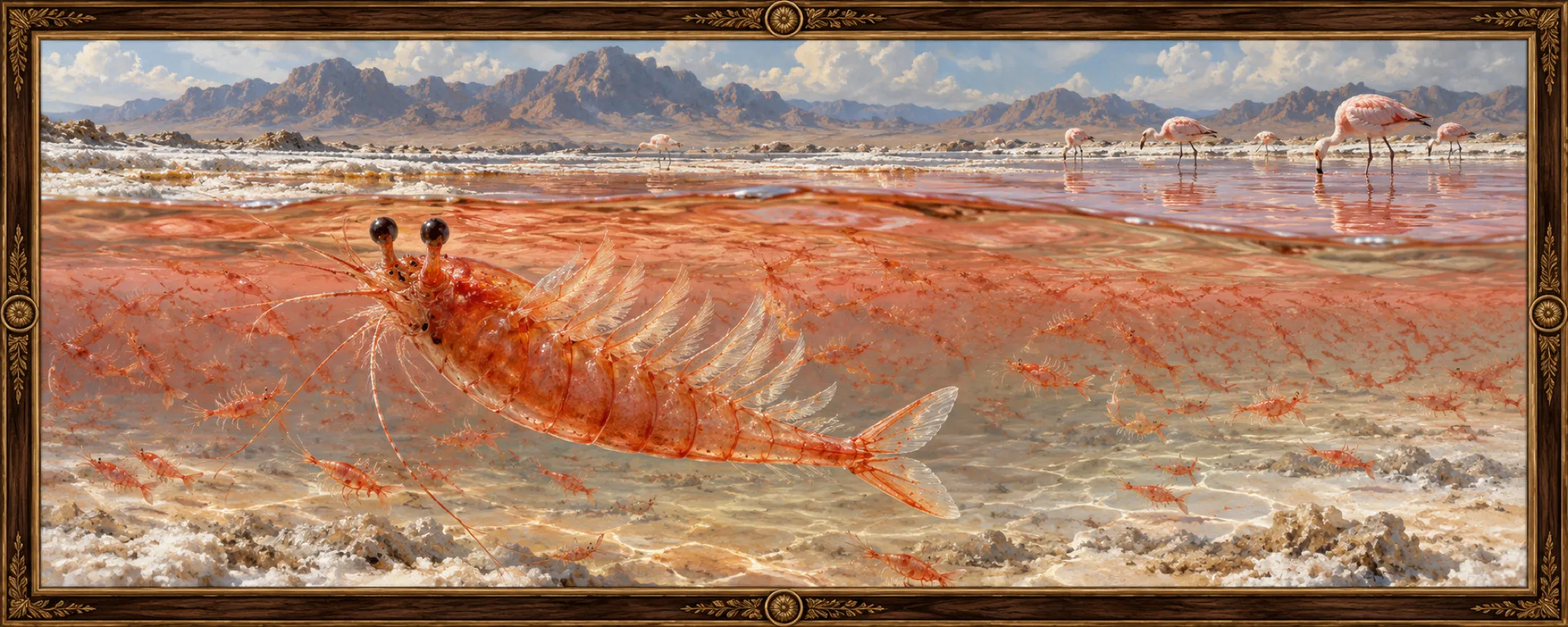
Pan Shrimp
Pan shrimp are the tiny red shrimp that appear in the brackish flood water of the salt and clay pans of the Rimward Basins within days of a storm, from eggs that have lain dry in the crust for years. In a good year on the Long Pan they come in such numbers that they turn the water pink, and the pink water brings the waders.
Appearance
A pan shrimp is no longer than a fingernail, a soft, many-legged, translucent body tinged red to orange, with two dark eyes on short stalks and a forked tail. It swims upside down, rowing with its many leaf-like legs in a steady flicker. Alone it is barely visible; in its millions it colours the water, from faint rose to deep salmon, and the edges of a drying pool are left crusted with their bodies and smelling of salt and fish.
Habitat and Range
They live only in the short-lived brine of flooded basin floors, and only where the water is too salty for fish. They are found in every Rimward pan that holds water after a storm, and in their greatest numbers on the Long Pan.
Abilities
Their eggs, smaller than grains of sand, can lie dry in the salt crust and the dust of the pan for many years, blown about by the wind, and hatch within a day or two of being wetted. A pan that has been dry for a generation will still bloom pink when it floods.
Life Cycle
A pan shrimp hatches, feeds on the green scum of the warm flood water, grows, mates, and lays in a few weeks. Its eggs sink into the mud or are left on the drying edge, and the shrimp dies with the water.
Uses and Dangers
Pan shrimp are food for the rose waders and the storm toads and, in a good year, for people: Rimward camps on the Long Pan’s edge scoop them in cloth, press them into cakes, and dry them in the sun, a salty paste eaten with meat and grain. They harm no one.