Fodder
Fodder in the Rimward Basins is whatever green feed the cistern terraces can be made to bear for the herds: a deep-rooted leafy forage cut again and again through the growing months, and coarse terrace grass dried into hay. It grows on the small walled terraces below the larger cisterns, beside hardy grain, on water shares that everyone in the stronghold knows. It is not grown for plenty. It is grown so that a kindred’s herds outlast the dry months without stripping the shared pastures to the root.
Appearance
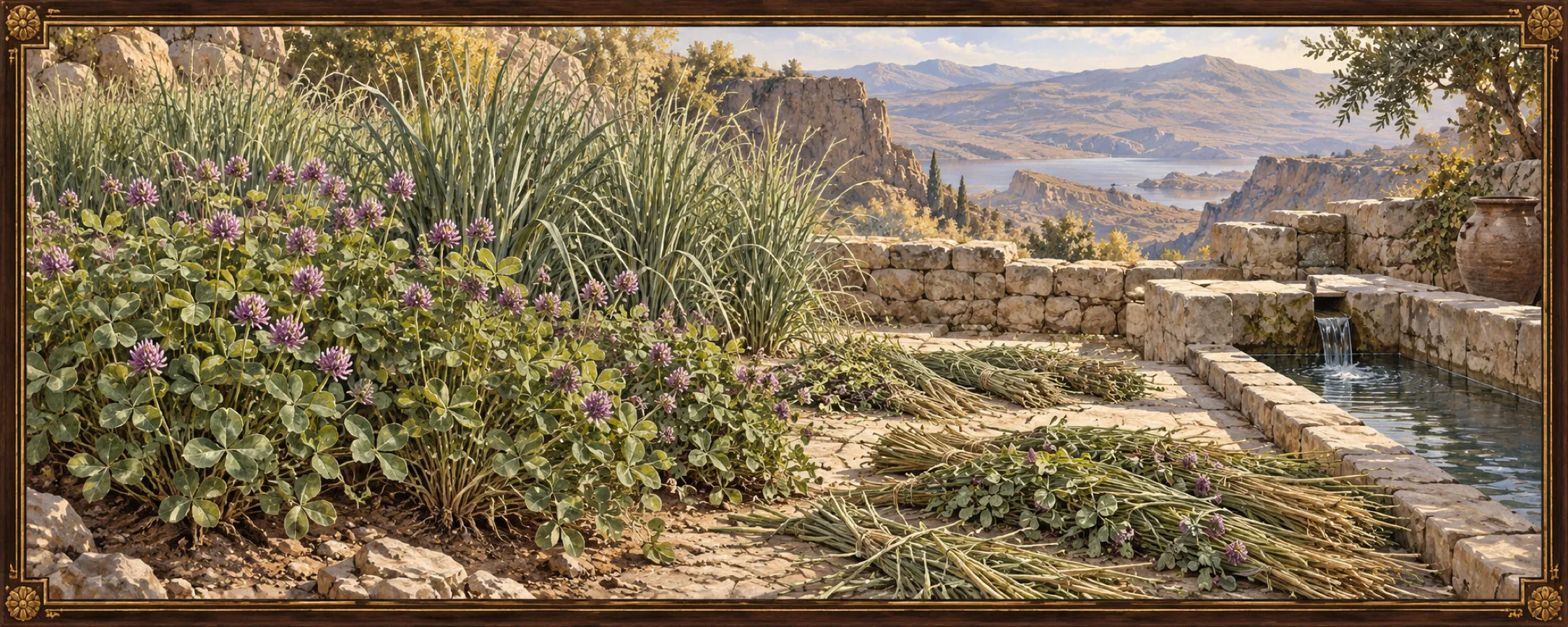
The leafy forage grows in low, dense clumps a hand or two high, its small rounded leaves set in threes on wiry stems, deep green against the pale stone of the terrace walls. In flower it carries small tight heads of purple or yellow that draw what bees the rim has. Its roots go down far further than the plant stands up, into the cracks of the rock beneath the terrace soil. The terrace grass beside it is taller and tougher, grey-green, cut before it seeds.
Cut fodder is laid to dry on the warm stones and smells sweet within a day; stored hay is stacked in the dry store-chambers dug back into the rim, or roofed with stones against the wind.
Habitat and Range
Fodder grows only where water can be led to it: the terraced spurs and rock shelves below the strongholds, fed by stone-lined channels from the cisterns. A terrace may be no bigger than a camp ring. Out on the shelves of the High Scars nothing is grown; the herds there live on the thin grass until it gives out (see Grass and Heath).
Behaviour and Temperament
The forage is patient. Cut, it grows back from the crown within weeks if it is watered; left dry, it sits brown and dormant through a bad season and greens again after the next storm. It holds terrace soil against the wind better than grain does, and a terrace kept under it a few years grows better grain afterwards.
Life Cycle
The leafy forage lives for several years from one sowing and is cut three or four times in a good season. When it thins, the terrace is turned over to grain for a few years and then sown back to forage. Terrace grass is cut before it seeds and regrows from the root.
Uses and Dangers
Fodder carries the herds through the dry months, when households and animals draw in to the rims and crowd around the strongholds. It feeds the animals kept close: milk beasts, young stock, the animals a kindred will need for the next escort. Hay is part of the stores a stronghold holds against a run of dry years, and is counted with them at the reserve moots.
Its danger is the water it drinks. Every share of cistern water released to a fodder terrace is a share not kept for people or for an arriving party, and in a dry cycle the question of whether to water the fodder at all is argued in the open, before the people whose water it is. Fresh green forage gorged by a hungry animal can swell its belly fatally, so herders let it wilt before feeding it.
Lore and Belief
Rimward Orcs reckon a stronghold’s strength in water first and fodder second, and say that a kindred with hay in its chambers "can afford to be patient". A terrace that has been watered out of turn is remembered, like a lie about water, against the line that did it.
Hay is what raiders burn first in a feud between strongholds, and the songs of the Rimward Basins remember the winters after a hay-burning as the cruellest.